
Brainstorming Strategies
Brainstorming is the process of reflecting on your curiosities and goals. It’s always easier to write about something you’re actually interested in! Keep your prompt, genre, and audience in mind as you explore. Because brainstorming has no linear path, these methods help you narrow your focus, find subtopics, or discover your unique angle.
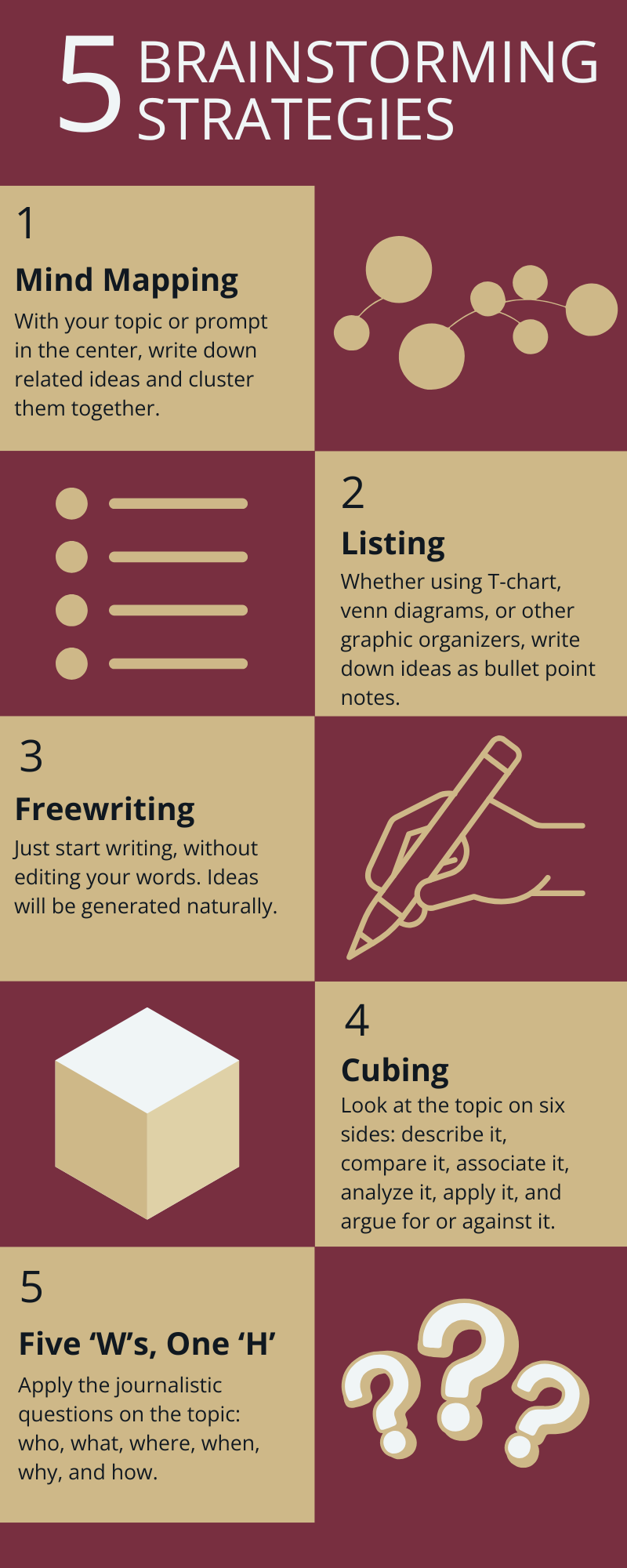
Click to enlarge guide
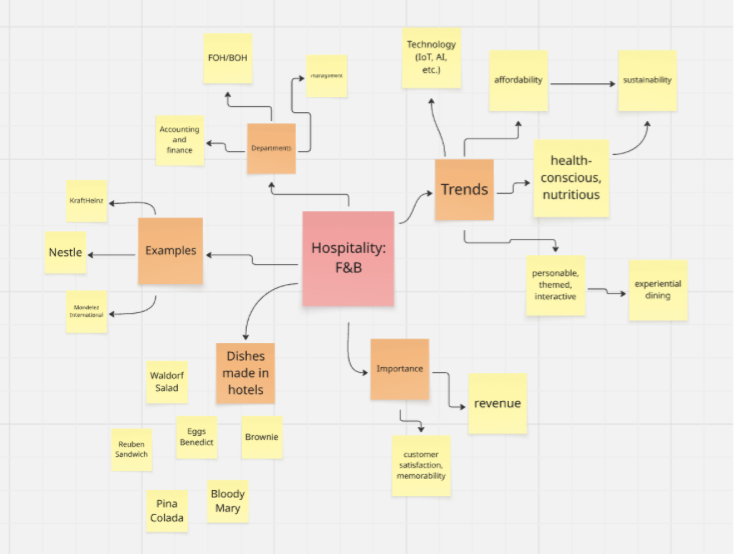
1. Mind Mapping
Topic Example: Hospitality: Food & Beverage
With your topic in the center, write down related ideas and cluster them together to see visual connections.
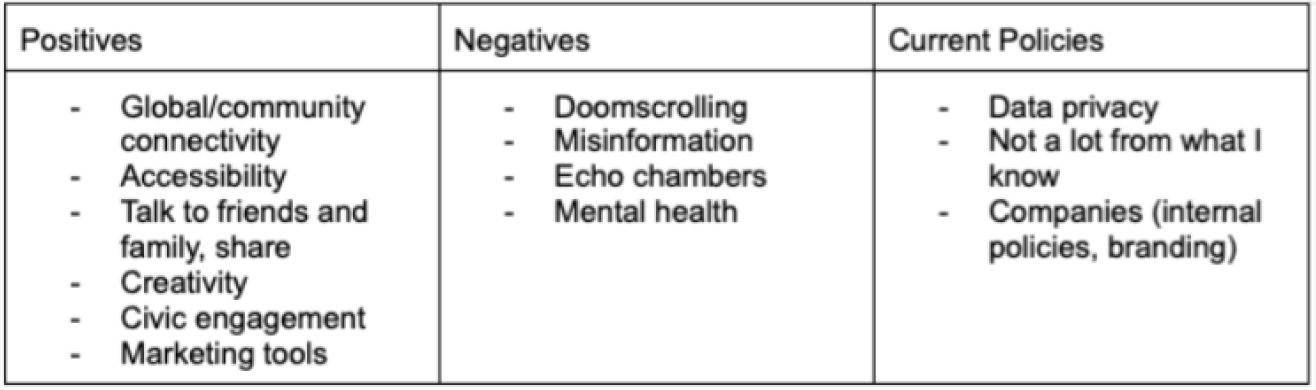
2. Listing
Topic Example: Impacts of Social Media
Use T-charts, Venn diagrams, or simple bullet points to organize thoughts rapidly without worrying about sentence structure.
3. Freewriting
Topic Example: Domestication of Animals
Just start writing for a set amount of time without editing. Let ideas generate naturally through a "stream of consciousness."
4. Cubing
Topic Example: Their Eyes Were Watching God
5. The Journalistic Six
Topic Example: Cryptography
- Who: Ancient ciphers to modern tech users.
- What: Coding data into algorithms for security.
- Where: Encryption, hashing, digital signatures.
- When: Whenever data requires protection.
- Why: Banking, password protection, browsing.
- How: Confidentiality, integrity, authentication.