
Organizing and Outlining
The purpose of an outline is to organize your research and create a plan for writing your paper. At this stage in the writing process, you should already have a good grasp on your topic, research question, and what resources you plan on using. Now, it is just a matter of how to go about organizing your research.
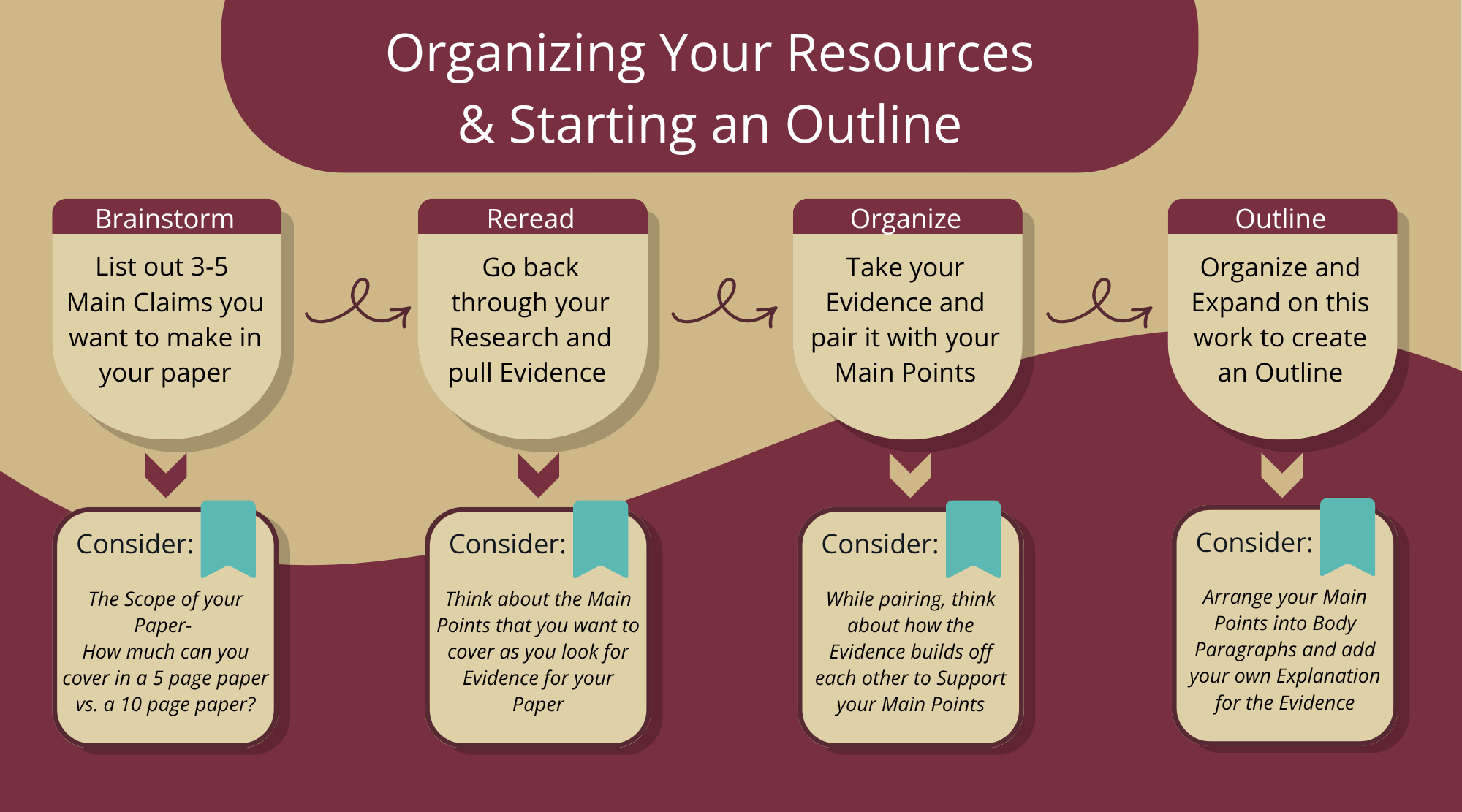
(Click image to enlarge in a new tab)
Brainstorm Claims
The first step in organizing your research is to brainstorm and list out the main claims that you want to make in your paper.
Gather Evidence
Go back through your resources and pull out evidence you can use. Consider what your main claims are and what sort of evidence can help you make your claim.
Pair & Sequence
Pair evidence with each main claim. Think about how your evidence can effectively build off each other to support your claim.
Building the Skeleton
With that, you have a skeleton of your outline. You now just have to think about how you want to organize your body paragraphs and fill in some more details:
- Chronological flow
- Compare and contrast
- Cause and effect
- Building to strongest argument
- Thesis statement
- Personal explanation
*Adjustments might need to be made depending on the paper you are writing, but this acts as a good starting point.