
Creating Your Research Poster: Content and Formatting
By Nate T.
The research poster serves as a summary of your research in a format that’s quickly and easily readable. Therefore, you’ll need to focus on your project’s most important aspects that can enter a conversation with your intended audience. Consider the following:
- A “catchy” title
- A clear statement of purpose
- A readable design
- Brief sections/explanations comprised of short paragraphs and bulleted lists
- Figures and tables that have clear purposes and are clearly labeled
- A bibliography or URL that links to sources
IMRAD Format
The research poster is a visual medium. These posters are often organized according to the IMRAD format:

Consider the following breakdown for each section’s content:
Title: Describes the main topic or finding of your paper and makes it easier for another researcher to find your work
Abstract: Provides a stand-alone summary of your work
Introduction: Provides sufficient background and context to set up the research question your study is trying to answer and the hypotheses being tested
Methods: Provides a detailed account of the procedures and materials, so readers are able to evaluate, critique, and replicate the study
Results: Presents a distilled version of your findings clearly and objectively
Discussion: Provides an interpretation of the results within the context established in the introduction
References: Informs the reader of all the sources used to produce the paper and study
(NEED SOURCE FOR THIS)
Poster Models
Is your research poster in the humanities? The sciences? Consider the following models as they are appropriate to your discipline:
Humanities
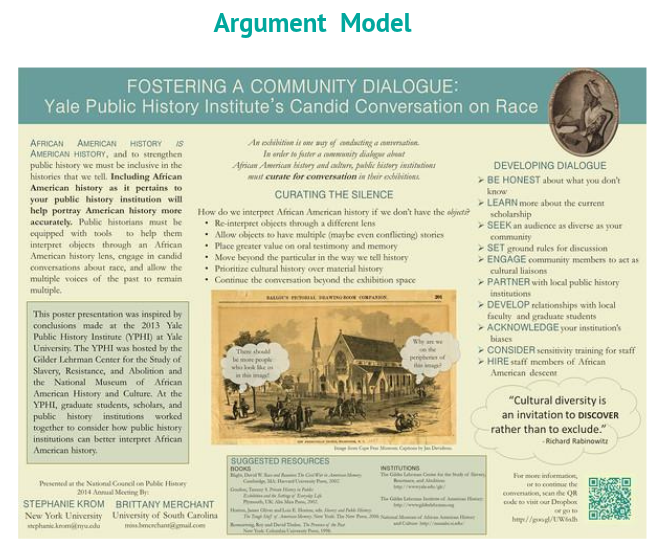
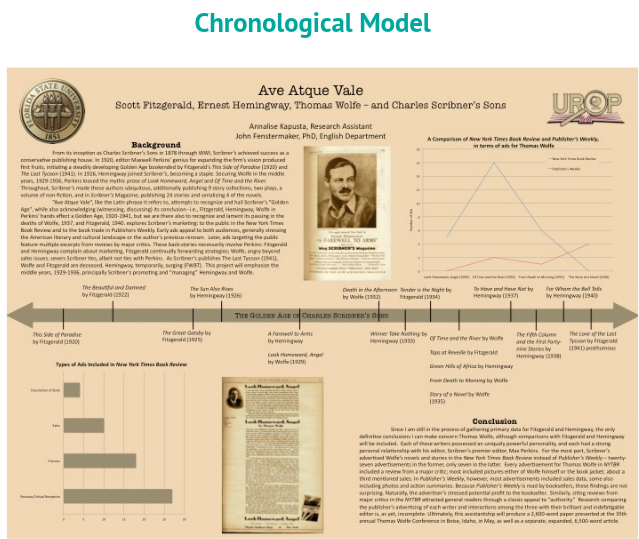
Sciences
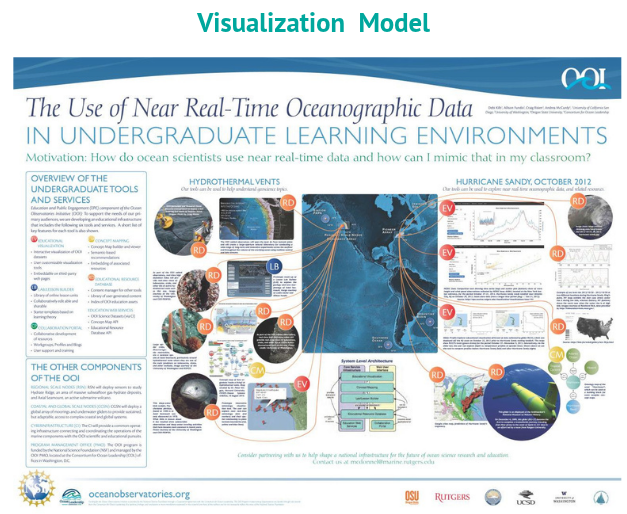
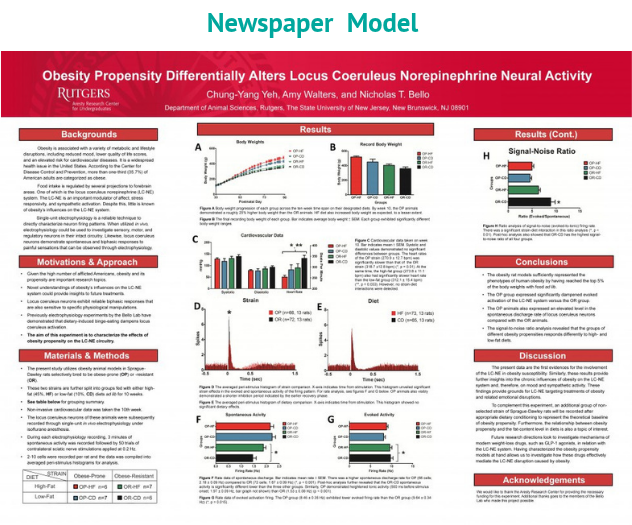
Framing Your Sections
Once your research poster is organized according to the IMRAD format, consider framing your sections to draw attention and enable focus:
Poster Design Criteria
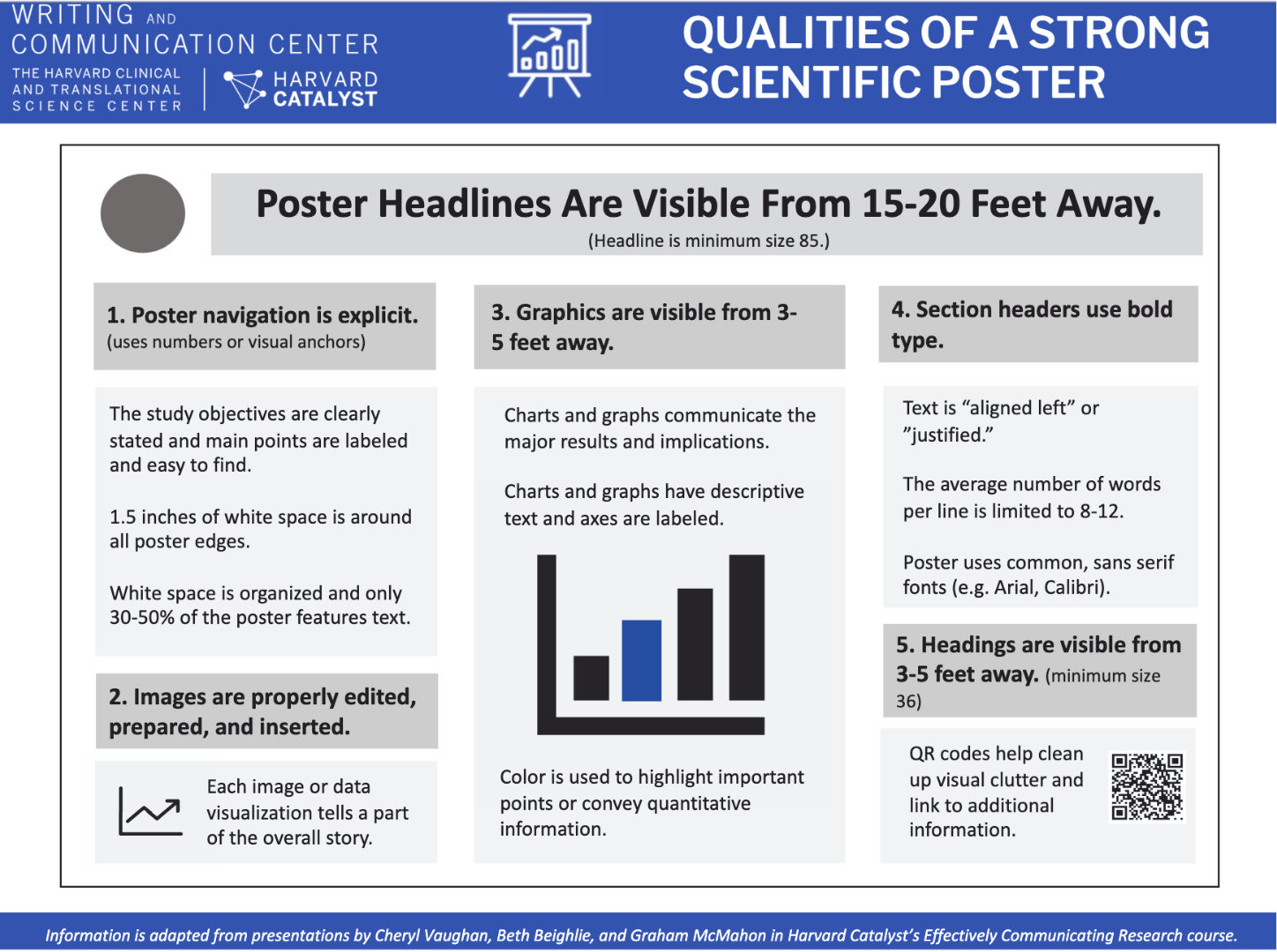
Once your research poster is drafted, ensure you are meeting the following criteria:
Organization/flow: Navigation is explicitly indicated with numbers or visual guides
Graphics: Images are clear from 3-5 ft. away; color is used to highlight important points or to convey quantitative information; visual anchors guide and help orient the viewer to content
Data visualization: Charts and graphs communicate the major results and implications; axes are clearly labeled; color and/or visual cues are used to highlight important data points
Text: Title and major headings are legible from 3-5 ft. away; explanatory text is associated with each graphic; 30%-50% of the content is comprised of the text
White space: Empty space is organized and large enough to organize content segments from 3-5 ft. away
Objectives/Intent: The study’s objectives are explicitly stated with the use of a heading
Main Points: Big ideas are clearly labeled and easy to find
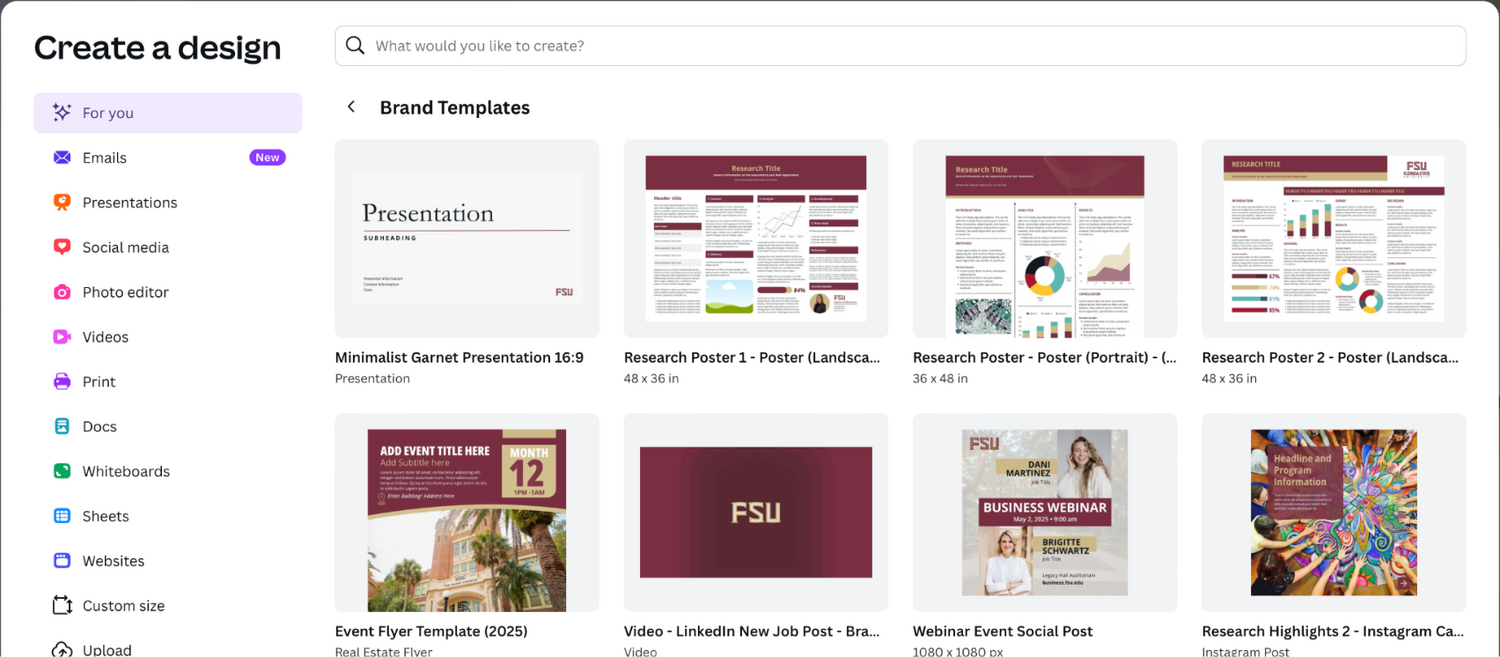
Want to brand your research poster according to the FSU style design? By logging into your FSU account on Canva, you have access to brand templates including research posters in the correct size:
For more guidelines on what sort of content and information to include, check out this helpful rubric from Harvard's Writing and Communications Center: Harvard Catalyst Rubric for Scientific Posters.